Thursday, July 27, 2017

Three New Orders of Insecta in Burmese Amber: is this Really Necessary?

http://arachnidworld.weebly.com/uploads/2/0/7/1/20718186/5726139_orig.jpg
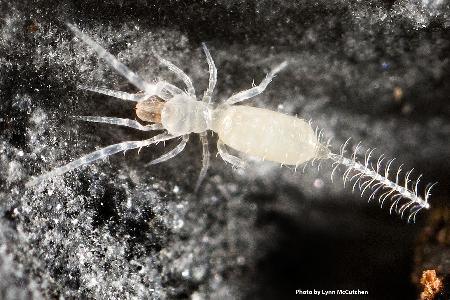
Prokoenenia wheeleri (Palpigradi: Prokoeneniidae) from Texas; attribution shown
For the past two decades, the amber deposits of the Hukawng Valley in Myanmar's Kachin State have been intensely scrutinized by paleoentomologists. The burmite recovered from this locale dates to the very end of the Cenomanian Stage (98.79 mya; Shi et al., 2012). Containing everything from what is by far the oldest known specimen of the flagrantly obscure arachnid order Palpigradi (largely the same as its modern counterparts; Engel et al., 2016) to uniquely specialized haidomyrmecine ants (weirdly unlike any of their modern counterparts; Perrichot et al., 2016), it is a treasure trove of exquisite Cretaceous microfaunal data.

Just within the past year and a half, three (count 'em, three) new insect orders have been described from Hukawng Valley burmite: namely, the Alienoptera (Bai et al., 2017), Aethiocarenodea (Poinar & Brown, 2017), and Tarachoptera (Mey et al., 2017). (And this is not even to mention the Permopsocida, an order that was established for Permian-Cretaceous insect taxa after the description of a specimen from the Hukawng Valley; Huang et al., 2016). After we pick our collective mandibles up off the floor, we should consider each of these taxa in turn: are their ordinal statuses truly defensible? Or, perhaps, are these better regarded as stem-groups of extant taxa?

Kinitocelis divisinotata, holotype (adult female)
First off, the Tarachoptera. This order consists of two genera, both placed in the Tarachocelidae. This peculiar family is clearly a member of the superorder Amphiesmenoptera, a clade consisting of the extant orders Lepidoptera (moths, and the diurnal moths we call "butterflies") and Trichoptera (caddisflies); of the 14 autapomorphic* amphiesmenopteran characters listed by Kristensen (1984) that are applicable to adult amber inclusions, only 3 are incontrovertibly absent from the Tarachocelidae (for what it's worth, paired setose pronotal warts, setose sclerites below or behind the metathoracic subalare†, and rod-like apodemes‡ on the eighth and ninth female abdominal segments; Mey et al., 2017).

Wing scales of Kinitocelis brevicostata (Tarachoptera: Tarachocelidae)
However, the unassuming, mandibulate-moth-like tarachocelids cannot be placed in either extant order of the Amphiesmenoptera. They possess scales on their wings, reminding one of the Lepidoptera; but this resemblance appears to be a superficial convergence, as some trichopterans have developed scale independently of their origin in the Lepidoptera (Huxley & Barnard, 1988)—meaning that it is plausible that scales could emerge independently as well in the Tarachocelidae (Mey et al., 2017). Conversely, the specialized haustellum (proboscis) and single nygma on the forewing characteristic of the Trichoptera are conspicuously lacking in all examined tarachocelid specimens (Mey et al., 2017). 

Head profiles of basal trichopterans and lepidopterans (23-24) and K. brevicostata (Tarachoptera; 25)
In short, not only can the Tarachocelidae not be placed in any extant order, but they also cannot be incontrovertibly judged more closely related to either of the extant amphiesmenopteran orders than to the other. One could say that the Tarachoptera are like what the most primitive Amphiesmenoptera would have been, were it not for some peculiar derived traits of their own: among these are vestigial maxillary palpi (quite unlike the functional examples in the basalmost moths and caddisflies—see above); a single medial wing vein (otherwise known from insects only in the monotypic glossatan moth family Aenigmatineidae, thus far described only from Australia's Kangaroo Island; Kristensen et al., 2014); and the absence of tibial spurs, which with the exception of a few odd lepidopterans are a universal feature of insects with complete metamorphosis. Since tibial spurs are involved in launching adult insects into flight (Burrows & Durosenko, 2015), tarachocelids' lack of them suggests that their flying capability was limited.

While eccentric autapomorphies juxtaposed with basal traits amount to a syndrome typical of stem-groups all across the tree of life, the fact that one cannot argue that Tarachocelidae is more closely akin to either the Trichoptera or Lepidoptera leads me to agree that one could parsimoniously grant the Tarachoptera ordinal rank. However, whether this is necessary is another question.

Type specimen of Aethiocarenus burmanicus
Unlike the Tarachoptera, the Aethiocarenodea were described based on a single species, Aethiocarenus burmanicus. A. burmanicus is known from a single adult female specimen, and is like nothing else on Earth: a small, wingless, flattened insect, with a narrow corpus and a triangular head with its hypotenuse situated opposite to its articulation with the thorax—a condition quite unlike the head of any other insect, extant or otherwise. The head is strongly hypognathous§ (see below), making for a distinctive profile. Adding an additional memorable trait to this already memorable habitus, a pair of apparently secretory glands were situated on the back of the neck (presumably defensive in function) (Poinar & Brown, 2017).

Profile of A. burmanicus holotype head
What do we make of this creature, taxonomically speaking? Very little, judging from Poinar & Brown (2017), who do not speculate on its phylogeny nor even bother to assign it provisionally to any subdivision of the Insecta. The presence of cerci would exclude it from the clade Acercaria (Hemiptera, Psocodea, etc.; Huang et al., 2016) and from those insect superorders that practice complete metamorphosis (e.g., the Amphiesmenoptera), leaving the only possible assignment for the Aethiocarenodea as the Polyneoptera. This assemblage may or may not be monophyletic (Beutel et al., 2013), and there is little basis for direct comparison of the Aethiocarenodea with its fellow members; all fourth tarsomeres extend distally beneath the respective fifth tarsomeres, which Poinar & Brown (2017) note vaguely recalls the tarsal condition of some Dermaptera (earwigs). We thus remain at a loss for valid comparisons to situate the Aethiocarenodea in the insect family tree. However, as argued by Christopher Taylor (rather more eloquently than I could put it), this does not necessarily warrant ordinal status: to place A. burmanicus in its own order is more an admission of ignorance than anything else.

By contrast, the (again monotypic) Alienoptera are clearly akin to mantises (Mantodea). Described from a single male specimen of Alienopterus brachyelytrus (Bai et al., 2016), the taxon is a creature with a triangular head and bristly profemora not unlike those of the most ancient mantids. While most of the features that define the Dictyoptera (cockroaches, termites, and mantises) cannot be falsified on the specimen of A. brachyelytrus, the presence of a profemoral brush (otherwise unique to the Mantodea) and excellently preserved genitalia clinch its classification therein.

Alienopterus brachyelytrus: enlarged arolia, tegmina, and orthognathous head are all visible
The Alienoptera can be distinguished from the Mantodea mainly on the basis of two peculiar characters: greatly shortened, sclerotized forewings analogous to those for which the Dermaptera are named, and utterly unlike anything observed in any Mantodea; and enlarged arolia|| reminiscent of those exhibited by the rockcrawlers (Mantophasmatodea) (Beutel & Gorb, 2008). Mantises, conversely, lack arolia (with the possible exception of the extinct Santanmantis). More conspicuously, the Alienoptera do not have the raptorial forelegs for which all mantises living and extinct are known (Wieland, 2013); the vestiture of the profemora would not have worked in opposition to tibial spines as it would in mantises' case.

Most of these traits are "retained ancestral conditions", since the ancestral dictyopteran presumably also lacked protibial spines and retained arolia; the "array of specialized [alienopteran] features" (autapomorphies, to use phylogenetic jargon) consist only of a saddle-shaped pronotum and earwig-like tegmina. Bai et al. (2016) exclude the species from the Mantodea proper, and reasonably so, but does this justify erecting a new order for the taxon?

In my opinion, no. To begin with, a strict consensus tree using 58 morphological characters firmly placed Al. brachyelytrus as the sister group to the Mantodea (Bai et al., 2016). Even the 30% of this male specimen's genitalia that is visible, a suite of body parts that Bai et al. (2016) duly note have evolutionary plasticity to a degree that they may differ even within the same order (Klass, 1997), "fully conform to the condition within" mantises. Moreover, the characters that exclude Al. brachyelytrus from the Mantodea are mostly "retained ancestral conditions", making this mantodean sister-group not a mantis by dint of lacking derived mantodean traits.  

Al. brachelytrus is as such not excluded from the Mantodea because it has closer kin elsewhere, but because it lacks some (but not all) of the derived traits that define that order: the status of the Alienoptera is thus contingent upon how broadly one wishes to spread the definition of the Mantodea. The bounds of that definition—where a basal dictyopteran more closely related to mantises than to any other extant taxon becomes itself a "mantis"—are subjective.

http://blogs.discovermagazine.com/seriouslyscience/files/2014/02/img_3280.800.jpg
Nymph and adult of Cryptocercus punctulatus (Cryptocercidae); photograph by David R. Maddison
For comparison, consider the cockroach family Cryptocercidae. Being subsocial wood-feeders dependent upon oxymonadids and hypermastigids in their hindguts for cellulose digestion, these cockroaches bear an obvious biological and morphological resemblance to termites, and are regarded as the sister-group of the infraorder Isoptera (Engel et al., 2009). With the exception of adult winglessness (an apomorphy), the features that distinguish the Cryptocercidae from termites are basal conditions with respect to the Isoptera: e.g., an ootheca (egg-case; vestigial or absent in termites). One could simply say, therefore, that cryptocercids are stem-group termites: we only call them "cockroaches" due to the convenience of that term. Likewise, one can either refer to Alienoptera as a mantodean stem-group, or as its own order. Arguably, neither position is "false", and so ordinal ranking is a matter of preference: of whether one chooses to lump or to split. And I, personally, would advocate that personal preference does not a new order make.

https://c1.staticflickr.com/6/5583/14903138957_8571973ca4_b.jpg
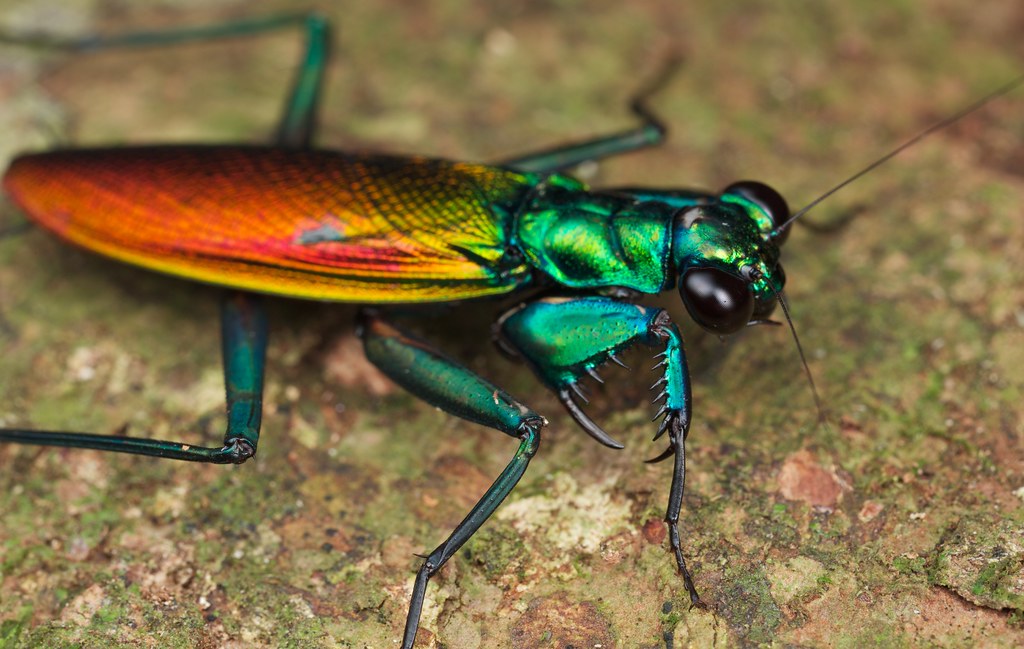
Bornean Metallyticus splendidus (Metallyticidae); photographed by Paul
On a tangent, given the clear anatomical gulf between cryptocercids and even the most basal known termite (Cratomastotermes wolfschwenningeri, a mid-Cretaceous Brazilian specimen classified in its own family; Engel et al, 2009), one could argue that an analogy between this systematic situation and that of the Alienoptera with respect to the Mantodea is stretching things a bit. However, given that the ancestral ethological condition of the Mantodea was that of prowlers on or under bark (Wieland, 2010; the metallyticid shown retains this basal niche), unlike the clearly foliage-abiding Al. brachyelytrus (Bai et al., 2016), there certainly was an ecological distinction between that insect and contemporary mantises.

In conclusion, I think that of the Alienoptera, Aethiocarenodea, and Tarachoptera, only the latter order is truly deserving of that rank, given the information now available. However, I admit that further data could lend support to the Aethiocarenodea: I think that a comprehensive search of other Cretaceous ambers for kin to this enigmatic little creature is in order. 


*A derived trait unique to a particular taxon.
†A sclerite immediately adjacent to the base of the insect wing, providing a place of attachment to the pleural wing muscle.
‡Ingrowths of the exoskeleton, serving as attachments for muscles.
§With downward-directed mandibles.
||An unsegmented lobe extending from the tip of the insect tarsus, situated between the tarsal claws.
A derived trait (with reference to its ancestral state) in a particular taxon, but not one necessarily unique to that taxon.
__________________________________________________________

Bai, M.; Beutel, R. G.; Klass, K.-D.; Zhang, W.; Yang, X.; and Wipfler, B. (2016). Alienoptera — a new insect order in the roach–mantodean twilight zone. Gondwana Research, 39, 317-326.

Beutel, R. and Gorb, S. N. (2008). Evolutionary scenarios for unusual attachment devices of Phasmatodea and Mantophasmatodea (Insecta). Systematic Entomology, 33(3), 501-510. doi: 10.1111/j.1365-3113.2008.00428.x

Beutel, R. G.; Wipfler, B.; Gottardo, M.; and Dallai, R. (2013). Polyneoptera or "lower Neoptera" - new light on old and difficult phylogenetic problems. Atti Academia Nazionale Italiana di Entomologia, Anno LXI, 2013: 133-142.

Burrows, M. and Dorosenko, M. (2015). Jumping mechanism and strategies in moths (Lepidoptera). Journal of Experimental Biology, 218, 265-266.

Engel, M. S.; Grimaldi, D. A.; and Krishna, K. (2009). Termites (Isoptera): Their Phylogeny, Classification, and Rise to Ecological Dominance. American Museum Novitates, 3650, 1-27. Retrieved 7/26/17 from http://www.bioone.org/doi/abs/10.1206/651.1

Engel, M. S.; Breitkreuz, L. C.; Cai, C.; Alvarado, M.; Azar, D.; and Huang, D. (2016). The first Mesozoic microwhip scorpion (Palpigradi): a new genus and species in mid-Cretaceous amber from Myanmar. Naturwissenschaften, 103(3-4), 19. doi: 10.1007/s00114-016-1345-4. 

Huang, D.-Y.; Bechly, G.; Nel, P.; Engel, M. S.; Prokop, J.; Azar, D.; Cai, C.-Y.; van de Kamp, T.; Staniczek, A. H.; Garrouste, R.; Krogmann, L.; dos Santos Rolo, T.; Baumbach, T.; Ohlhoff, R.; Shmakov, A. S.; Bourgoin, T.; and Nel, A. (2016). New fossil insect order Permopsocida elucidates major radiation and evolution of suction feeding in hemimetabolous insects (Hexapoda: Acercaria). Scientific Reports, 2016(6), 23004. doi: https://dx.doi.org/10.1038%2Fsrep23004


Huxley, J. and Barnard, P. C. (1988). Wing scales of Pseudoleptocerus chirindensis Kimmins (Trichoptera: Leptoceridae). Zoological Journal of the Linnean Society, 92, 285-312.

Klass, K.-D. (1997). The external male genitalia and the phylogeny of Mantodea and Blattaria. Bonner Zoologische Monographien, 42, 1-341.

Kristensen, N. P. (1984). Studies on the morphology and systematics of primitive Lepidoptera (Insecta). Steenstrupia, 10, 141-191.

Kristensen, N. P.; Hilton, D. J., Kallies, A.; Milla, L.; Rota, J.; Wahlberg, N.; Wilcox, S. A.; Glatz, R. V.; Young, D. A.; Cocking, G.; Edwards, T.; Gibbs, G. W.; and Halsey, M. (2014). A new extant family of primitive moths from Kangaroo Island, Australia, and its significance for understanding early Lepidoptera evolution. Systematic Entomology, 40, 5-16. 

Mey, W.; Wichard, W.; Mueller, P.; and Wang, B. (2017). The blueprint of the Amphiesmenoptera-Tarachoptera, a new order of insects from Burmese amber (Insecta, Amphiesmenoptera). Fossil Record, 20, 129-145. Retrieved 7/16/17 from www.foss-rec.net/20/129/2017/fr-20-129-2017.pdf 

Perrichot, V.; Wang, B.; and Engel, M. S. (2016). Extreme Morphogenesis and Ecological Specialization among Cretaceous Basal Ants. Current Biology, 26, 1468-1472. Retrieved 7/25/17 from https://www.researchgate.net/publication/303544013_Extreme_Morphogenesis_and_Ecological_Specialization_among_Cretaceous_Basal_Ants

Poinar, G. Jr. and Brown, A. E. (2017). An exotic insect Aethiocarenus burmanicus (Aethiocarenodea ord. nov., Aethiocarenidae fam. nov.) from mid-Creataceous Myanmar amber. Cretaceous Research, 72, 100-104. Retrieved 7/16/17 from https://nature.berkeley.edu/garbelottoat/wp-content/uploads/insect3.pdf

Shi, G.; Grimaldi, D. A.; Harlow, G. E.; Wang, J.; Wang, J.; Yang, M.; Lei, W.; Li, Q.; and Li, X. (2012). Age constraint on Burmese amber based on U-Pb dating of zircons. Cretaceous Research, 37, 155-163. Retrieved 7/25/17 from http://www.sciencedirect.com/science/article/pii/S0195667112000535

Wieland, F. (2010). The Phylogenetic System of the Mantodea (Insecta: Dictyoptera) (unpublished dissertation). Georg-August-Universität, Göttingen.

Wieland, F. (2013). The Phylogenetic System of the Mantodea (Insecta: Dictyoptera). Species, Phylogeny & Evolution; 3, 3-222.

Tuesday, May 2, 2017

A Tropical Monstrosity in Ohio: the Owl Moth

On October 9th of last year, I happened across this beauty in the breezeway of my apartment in Columbus, OH. The specimen was dead, but exceedingly fresh. It had been a chilly night, with a low near 40; she had evidently perished just a few hours beforehand.

Not being a lepidopterist, I really had little idea of what I had found, other than that it was an erebid moth not unlike the Black Witch (Ascalapha odorata). However, further investigation demonstrated that this enormous specimen (wingspan 15 cm., as shown) was in fact a female Owl Moth (Thysania zenobia), along with the Black Witch a member of the Thermesiini. 

Much to my pleasure, the find is unusual. T. zenobia ranges throughout the eastern Americas south to Rio Grande do Sul (Specht et al., 2004),  and occurs in the Greater Antilles and Galapagos Islands (Roque, 1999): according to the Ohio Lepidopterists' Society, it has only been collected in the state on five occasions, none of which occurred in Franklin County (Rings et al., 1992).

Indeed, the animal is a tropical stray. Their caterpillars' cassiine host plants (Specht et al., 2004) do not grow natively in the Lower 48. Early authors even proposed that its appearance in the northern United States was due to human mediation (Felt, 1907). However, given that they have cropped up in good condition in Wisconsin (Ziemer, 1949), New England (Farquhar, 1938) and Ohio (Rings et al., 1992) on occasion, it is now clear that the moths fly northwards under their own power; their native presence in the Galapagos would also indicate excellent dispersal capabilities.

One lepidopterist wrote that he was "unprepared for" collecting a live T. zenobia in Ontario while sugaring for underwings (Catocala spp.): "However, the monster was taken" (Kilman, 1889). I regret that I did not have the same good fortune to see this T. zenobia in life. She would have brought to my mind Albert Giraud's poem cycle "Pierrot Lunaire" (here translated by Cecil Gray):

 And from heaven earthward bound
Downward sink with somber pinions
Unperceived, great hordes of monsters
On the hearts and souls of mankind...
Gloomy, black giant moths.     
 
___________________________________________________________

Farquhar, D. W. (1938). The Lepidoptera of New England (Doctoral dissertation). Harvard University, Cambridge.

Felt, E. P. (1906). 22nd Report of the State Entomologist on injurious and other insects of the state of New York 1906. New York State Museum Bulletin, 110, 39-44. 

Kilman, A. H. (1889). Correspondence: a rare moth. The Canadian Entomologist, 21(1): 240. 

Rings, R. W.; Metzler, E. H.; Arnold, F. J.; and Harris, D. H. (1992). The Owlet Moths of Ohio: Order Lepidoptera, Family Noctuidae. Bulletin of the Ohio Biological Survey, 9(2), vi+219 pp.

Roque, L. (1999). Two large tropical moths, Thysania zenobia (Noctuidae) and Cocytius antaeus (Sphingidae) colonize the Galapagos Islands. Journal of the Lepidopterists' Society 53(3), 129-130.  

Specht, A.; Silva, E. J. E.; and Link, D. (2004). Noctuídeos (Lepidoptera, Noctuidae) do Museu Entomológico Ceslau Biezanko, Faculdade de Agronomia Eliseu Maciel, Universidade Federal de Pelotas, RS. Revista Brasileira de Agrociência, 10(4), 389-409.

Ziemer, S. E. (1948). Erebus odora and Thysania zenobia in Wisconsin. The Lepidopterist's News, 2(3), 25-36.

Sunday, March 5, 2017

Announcing the Iberobaeniidae


Holotype of Urtea graeca, mustachioed with silly maxillary palporgans (Paulus, 2004)
Undoubtedly, Europe is one of the regions most thoroughly picked-over by descriptive taxonomists, particularly in the case of an insect group as comparatively popular with entomologists as the beetles (Coleoptera). Nonetheless, unexpected oddities in the beetle department do crop up in the western Palearctic from time to time. The incomparable Crowsoniella relicta (placed in a monotypic family) is known from soil samples collected from the base of a single Italian chestnut tree (Pace, 1975), while Urtea graeca (a genus and species known from a single locality in northern Greece) is the only European representative of the oddball Atractocerinae (Lymexylidae), a wood-boring taxon that aside from a single Japanese species (Arractocetus nipponicus) is restricted to the tropics and southern hemisphere (Paulus, 2004).

Male Iberobaenia minuta; scale bar=1 mm.
Last December, an entirely new beetle family was described from the mountains of southern Spain, including the single genus Iberobaenia and two species distinguished upon the basis of the male genitalia (Bocak et al., 2016). What appears to be a third, still-undescribed species is known only from a third-instar larva. The circumstances of their discovery warrant some explanation: the larvae were collected for soil biodiversity surveys in southern Spain and noticed when metagenomic analysis of these samples revealed mitochondrial sequences within the Elateroidea (click beetles and kin) that did not nest within any family; these sequences allowed linkage of these larvae with adult male specimens, which had been collected by sweeping foliage. Interestingly, the relative positioning of protein-coding and ribosomal genes in the beetle's mitogenome had been altered from the putatively ancestral condition, this being the first such rearrangement documented in the Coleoptera (Andujar et al., 2016) and an abnormal occurrence for any insect, which tend to be conservative with respect to mitochondrial gene order (Cameron, 2014).

In appearance, Iberobaenia is clearly elateroid in both known ontogenetic stages. The tiny, soft-bodied male imagos resemble, in their reduced mouthparts and lack of elytral costae or tubercles, other elateroid lineages that have undergone miniaturization relative to the superfamily's norm. Their habitus is most comparable to such genera as Paradrilus (Omalisidae) and Antennolycus (Lycidae), but iberobaeniids differ from these in their hypognathous* mouthparts (in contrast to omalisids), lack of a pronotal margin (differing from lycids and non-paradriline omalisids in this respect), and uncompressed legs (here being distinct from otherwise comparable lycids). Larvae are not dorsoventrally flattened and lack urogomphi† (unlike their lycid counterparts), with robust convergent mandibles (Bocak et al., 2016).

trilobite-beetle-ponies
Female Duliticola paradoxa (Lycidae): image by Bernard Dupont
A taxonomically comprehensive molecular phylogenetic analysis of the Elateroidea, using two loci each from the nuclear and mitochondrial genomes, retrieved Iberobaenia as the sister group of the Lycidae (net-winged beetles). Male miniaturization in the genus is noteworthy in terms of speculation on iberobaeniid biology. Elateroids with males of this dwarfish, soft-bodied description tend to be sexually dimorphic, and if comparison of Iberobaenia to these better-known cousins is valid, its unknown females are probably larviform crustacean-like things far larger than their paramours. This syndrome has evolved on multiple occasions throughout the Elateroidea, with examples of flightless lycid females looking more like denizens of the Sea of Corruption than inhabitants of the East Indies (see above).

While Iberobaenia is certainly distinctive in that it cannot be confidently placed in any elateroid family, I personally doubt that its assignment to an entirely new one will hold under future acquisition of more genetic data. From a morphological standpoint, the proposed Iberobaeniidae lacks any nomothetic‡ characters, meaning that we must rely upon the phylogenetic analysis of Bocak et al. (2016) for justification of its ranking as family. This phylogeny (with Elaterophanes and Aphodiites, which are respectively the oldest known elateriforms and scarabaeiforms, as calibration priors) suggests that Iberobaenia branched from its most recent common ancestor in the mid-Jurassic: I wonder how much water mitogenomes (from which half of the data used in this analysis were drawn) hold at that timescale, given their famously rapid rate of mutation (Brown et al., 1979). 

As with so many things in our world, more data would be welcome.

*With mouthparts directed downwards.
†Superficially cercus-like processes on the terminal segments of some beetle larvae.
‡One particular feature that is unique to the taxon in question.
____________________________________________________________

Andujar, C.; Arribas, P.; Linard, B.; Kundrata, R.; Bocak, L. and Vogler, A. P. (2016). The mitochondrial genome of Iberobaenia (Coleoptera: Iberobaeniidae): first rearrangement of protein-coding genes in the beetles. Mitochondrial DNA Part A: DNA Mapping, Sequencing, & Analysis; 28(2), 156-158. Retrieved 3/3/17 from http://www.tandfonline.com/doi/abs/10.3109/19401736.2015.1115488?journalCode=imdn21http://www.tandfonline.com/doi/abs/10.3109/19401736.2015.1115488?journalCode=imdn21

Bocak, L.; Kundrata, R.; Fernandez, C. A.; and Vogler, A. P. (2016). The discovery of Iberobaeniidae (Coleoptera: Elateroidea): a new family of beetles from Spain, with immatures detected by environmental DNA sequencing. Proceedings of the Royal Society of Britain, 283, 1-7. Retrieved 3/5/17 from https://pdfs.semanticscholar.org/e4da/1e1282ecb9a5b438ed0de3bb9193dc1ea10e.pdf

Brown, W. M.; George, M. Jr.; and Wilson, A. C. (1979). Rapid evolution of animal mitochondrial DNA. Proc. Nat. Acad. Sci. USA, 79, 1967-1971. 

Cameron, S. L. (2014). Insect mitochondrial genetics: implications for evolution and phylogeny. Annual Review of Entomology, 59, 95-117. 

Pace, R. (1975). An exceptional endogeous beetle: Crowsoniella relicta n. gen. n. sp. of Archostemata Tetraphaleridae from central Italy. Bolletino del Museo Civico di Storia Naturale, Verona; 2, 445-458.

Paulus, H. F. (2004). Urtea graeca nov. gen. et nov. spec., der erste Vertreter tropischen Atractocerinae in Europa sowie eine Beschreibung von Hymaloxylon aspoecki nov. spec. aus Yunnan (China) (Coleoptera, Cucujiformia, Lymexylidae, Atractocerinae nov. status). Denisia, 277-290. Retrieved 2/11/17 from http://www.zobodat.at/pdf/DENISIA_0013_0277-0290.pdf